Talking about isopropyl acetoacetate makes me think about the way chemistry shapes not just products but the bigger picture of manufacturing and research. This compound doesn’t get the attention of high-profile plastics or wonder drugs, yet its story runs deep. Chemists in the early twentieth century mapped out its synthesis as they dug into the broader world of β-keto esters—a class they found could open doors to new medicines and specialty materials. Early laboratory efforts focused on its preparation by condensing isopropyl alcohol with diketene or reacting isopropanol with acetoacetic acid. Over decades, tweaks in these steps made the process reliable and suitable for larger batches, embedding isopropyl acetoacetate into the workflow for pharmaceuticals and dyes. The changes didn’t just serve industry—they stamped a mark on how chemists saw the power of open-carbonyl intermediates, building blocks for more intricate molecules.
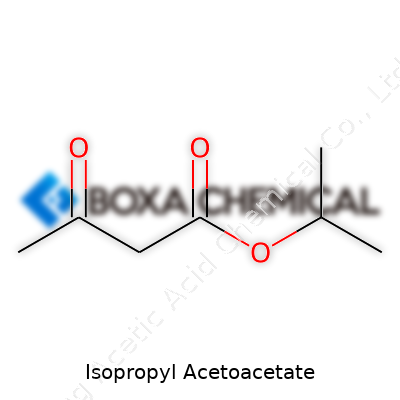
Many of us have crossed paths—often unknowingly—with products touched by isopropyl acetoacetate. This clear, colorless liquid carries a faint fruity odor. Its structural makeup—basically the combination of a ketone and an ester—gives it a versatility that chemists keep coming back to. With a molecular formula of C7H12O3, each molecule serves as a balanced mixture of reactivity and stability. It doesn’t shout its presence but anchors itself in the supply lines for pigments, flavorings, and specialty chemicals.
Isopropyl acetoacetate stands out with its moderate boiling point, often close to 180°C, and its miscibility with organic solvents like ethanol and ether. Water doesn’t welcome it quite as freely, which comes in handy during purification steps in chemical synthesis. Most of the time it feels like people overlook the role of boiling and flash points—until they start dealing with safety or reactions that require careful temperature control. Isopropyl acetoacetate’s stability makes storage manageable, yet its active methylene group keeps it reactive enough for a broad range of downstream modifications.
Many regulations ask for clear labeling. Producers write off exacting technical standards as a cost of doing business, but these specs safeguard end-users. High-purity grades fetch the best prices; impurities matter here, since even trace water or organics can spoil a planned synthesis. Typical specs zero in on assays (usually above 98%), moisture levels, and acid value. Each drum or bottle needs to reflect that attention to detail, not just to meet standards but to keep reactions predictable and to avoid costly failures on the bench or factory floor.
Lab veterans and process chemists agree the classic approaches set the tone—interacting diketene with isopropanol remains tried and true, under controlled conditions where temperatures and catalysts make the difference between a clean reaction and a sticky mess. Avoiding excess moisture and unwanted side-reactions leads to a product you can trust. Batch preparation often uses stainless steel, with precise metering pumps and strict control checks that echo through modern plant safety and quality programs. Each tweak of pH, temperature, and mixing rate gets serious scrutiny—mistakes mean both waste and risk.
The ketone and ester groups don’t just sit quietly—they enable countless transformations. Isopropyl acetoacetate participates in alkylation, condensation, and Michael addition reactions, opening doors to scents, flavors, and pharmaceuticals. Chemists can modify it to produce complex aromatic compounds or change the ester group to suit particular industrial goals. These possibilities reflect practical value; one small bottle in a lab can kick off development of hundreds of downstream products, each with its niche.
People use different names to talk about the same yellow-tinged liquid: 2-Isopropoxycarbonyl-3-pentanone, isopropyl 3-oxobutanoate, and IPAA. These synonyms don’t just show up on paperwork; they reflect the spread of this chemical across continents and supply chains. A research chemist digs through catalogs using all these names, while purchasing agents juggle them depending on the supplier’s history and language. The tangle of names means it pays to check structure and specs closely every time, to avoid expensive mix-ups.
Having handled open containers of organics in university labs, I’ve seen firsthand that taking shortcuts with isopropyl acetoacetate turns small mistakes into big ones. This substance ignites if mishandled; vapors concentrate around leaks or spills, and proper ventilation makes all the difference. Safety data emphasizes skin and eye protection, inhalation avoidance, and keeping stocks away from strong oxidizers or acids. In regulated workplaces, routine training and checklists reinforce these habits. Fire departments and health inspectors rely on clear signage, spill response plans, and storage away from potential ignition sources. Workers benefit from gloves, goggles, and chemical-resistant clothing. The focus on best practices doesn’t just meet compliance—it moves the needle on safety culture, which carries over to everything else in a facility.
The world of colorants and paints uses isopropyl acetoacetate as a starting point for pigments that hold up to sun and weather. In pharmaceuticals, it stands as a key precursor for synthesizing drugs with more complex backbones, feeding into antibiotics and anti-inflammatory agents. Agricultural companies buy it to assemble crop protection products and biologically active intermediates. You might not see the chemical name on a finished item, but you likely use goods that depend on its chemistry: printing inks, cosmetic additives, and even exotic flavors that show up in gourmet kitchens all trace their heritage to this small molecule.
Research teams revisit isopropyl acetoacetate to extend its reach each year. Academic labs look for routes to greener synthesis using less hazardous reactants, aiming for higher yields at lower temperatures. Industrial scientists create process modifications with improved waste capture, trying to squeeze efficiency from every kilo. I’ve seen new patents on methods that simplify recovery and purification, cutting energy costs and batch times. Improvements here trickle down to safer work environments and lighter environmental loads, meeting sustainability goals that have moved from slogans to mandates.
Toxicity research on isopropyl acetoacetate matters, given its widespread applications. Acute effects stick mostly to skin and eye contact, though repeated vapor exposures add to workplace risk. Earlier studies tracked uptake and metabolism in rodents, finding breakdown products similar to those from simple esters. Chronic toxicity and environmental fate drive stricter rules for waste disposal, spill cleanup, and emissions. Laboratories and factories now monitor air concentrations, emphasizing prevention long before regulatory limits loom. In chemical safety, what appeared to be a low-risk compound can become a headline if companies cut corners—long-term monitoring and transparency keep communities informed and workers protected.
Isopropyl acetoacetate doesn’t get the headlines, but the research landscape keeps shifting. Synthetic chemists look for renewable feedstocks and zero-waste manufacturing to future-proof supply chains. Regulatory tightening on emissions and hazardous waste will reshape production standards and reporting. As new catalytic techniques catch on, the cost and accessibility of isopropyl acetoacetate may change, making it more attractive for both large and small-scale users. Creative thinking about recycling and safer derivatives will influence which industries lean on this compound in the next decade. The core value hasn’t faded—if anything, the flexibility and robust performance of isopropyl acetoacetate leave it well positioned as a foundation for energy-efficient and eco-friendly chemical synthesis, no matter what shape the market or regulations take.
People rarely talk about isopropyl acetoacetate outside of chemistry circles, yet this compound quietly shapes things that crop up everywhere. You probably won’t spot it in your local supermarket, but its fingerprint lives in products we see every day. It acts like a hidden bridge in the world of chemical reactions, especially when building blocks for medicines and dyes are on the line.
In my early chemistry days, I saw this substance show up in reaction schemes again and again. I’d be helping a grad student who needed to make a new intermediate for a better painkiller, and that bottle of isopropyl acetoacetate was front and center. The reason comes down to its knack for versatility. It has just the right atomic arrangement to give up part of itself—or swap out its pieces—so chemists can build bigger, more complex molecules. This ability makes it a go-to choice when creating cores for drugs like antimalarials or medications that tackle high blood pressure.
Beyond medicine, the dye world taps isopropyl acetoacetate to kick off pigment production. Anyone who’s worn a cotton shirt dyed a bold color or has watched bold hues flow from a printer probably owes some thanks to this compound. It transforms basic starting blocks into bright azo dyes, which color everything from textiles to inks. The process hinges on the active groups it contains—they make color chemistry possible by locking in intense, durable shades.
Many folks don’t realize isopropyl acetoacetate helps the coatings on wooden tables or painted windows last longer. Its chemical properties promote smooth flow and stable curing during varnish and resin production. From fixing cracks in floors to making nail polish dry evenly, this compound helps the final result withstand wear and tear. Chemists in manufacturing rely on its reactivity to balance performance with reasonable safety, testing formulas so products don’t flake or dull after a week of real use.
Schools and colleges use isopropyl acetoacetate for teaching time-tested reactions that model industrial progress. Kids mixing unfamiliar reagents in a lab might not get excited about the name, yet the reaction’s outcome demonstrates principles like nucleophilic addition—the backbone for industrial syntheses. I remember instructors highlighting it as a safe teaching tool, since it behaves predictably under guided conditions.
Every powerful chemical brings responsibility. While it supports the backbone of new medicine and colorful innovations, safe handling remains crucial. Lab ventilation, gloves, and closed storage keep hazards to a minimum. Many companies invest in staff training and updated equipment to avoid spills or dangerous exposure, since even a useful compound brings risk if mishandled. We all benefit when scientific progress goes hand-in-hand with good stewardship and rigorous safety protocols.
Sustainability matters now. Research teams look for ways to create and re-use isopropyl acetoacetate with fewer environmental downsides. Greener ingredients, closed-loop systems, and effective recycling offer hope for the next decade of product design. At the end of the day, making the world brighter, healthier, and safer without overloading people or planet stands as a goal worth real effort.
Stepping into a lab or workshop with a bottle labeled "Isopropyl Acetoacetate" demands respect. This liquid smells faintly sweet, but don’t let that fool you. Anyone who's spent time handling chemicals quickly learns a truth: most mistakes happen not through carelessness, but through routine. Familiarity gives us a false sense of security. The right mindset—one that never drops its guard—keeps people safe.
Some folks roll their eyes at gloves, goggles, and fume hoods. They call them hassles or overkill. During my graduate days, no one in the lab regretted a single piece of safety gear—especially on those days when a reaction splashed or fumes billowed unexpectedly. Isopropyl Acetoacetate irritates the skin and eyes, and breathing in vapors brings on headaches or even worse. Direct contact with skin can leave chemical burns. The best line of defense? Simple barriers—nitrile gloves, chemical splash goggles, and a decent lab coat.
Fume hoods aren’t a fancy accessory. I’ve seen vapors hang in the air on a humid day, making everyone cough. Working inside the hood pulls fumes away from faces and lungs. The temptation to work on an open bench may save a few seconds now, but an emergency room visit costs more.
People sometimes stash bottles carelessly or reuse containers. In my early days, a coworker poured a chemical into an unmarked bottle for convenience. Later, someone mistook it for another solvent—a near disaster. Always keep labels clear and unambiguous. Store Isopropyl Acetoacetate in a well-ventilated spot, away from heat or ignition sources. The stuff catches fire more easily than you’d guess, so mixing it with oxidizers or strong acids can invite explosions or wild reactions.
Spills and splashes earn a quick, calm cleanup. Paper towels and bare hands don’t cut it—chemical-resistant absorbents and gloves save skin from misery. Ventilate the area, use a spill kit, and never let your guard down. A few seconds of laziness means a few hours of paperwork and guilt later.
In chemical work, training acts as a shield. Newcomers watch veterans not just for tips, but to see the habits that prevent accidents. Refreshing safety routines isn’t a box-ticking exercise; it’s a habit molded by countless stories—some you want to avoid repeating. Real training includes knowing who to call and where to find the nearest eyewash as well as how to read a safety data sheet.
Building a culture where questions about safety never get brushed aside transforms a workplace. Workers who look out for each other and speak up stop trouble before it starts. Having emergency plans handy, keeping gear clean and ready, and making safety equipment accessible turns worry into confidence.
People get home safe not through luck, but because those precautions matter. That’s the kind of experience no one forgets—and everyone benefits from.
Some chemicals pop up in conversations for a reason—and for folks involved in labs, Isopropyl Acetoacetate is one of those names that hold weight. It’s more than jargon for chemists; it shows up in real-world problems where creativity and science collide.
The chemical formula for Isopropyl Acetoacetate is C7H12O3. This isn’t just a string of letters and numbers—a lot happens behind those symbols. The structure stacks up with a backbone that helps it play a role in synthesis. I got to experience the practical side of this compound back in college, where reaction mechanisms turned from textbook footnotes to hours at the bench, waiting for simple molecules to link up or break apart. C7H12O3 is hardly glamorous to say out loud, but it’s like a handy wrench in a toolbox.
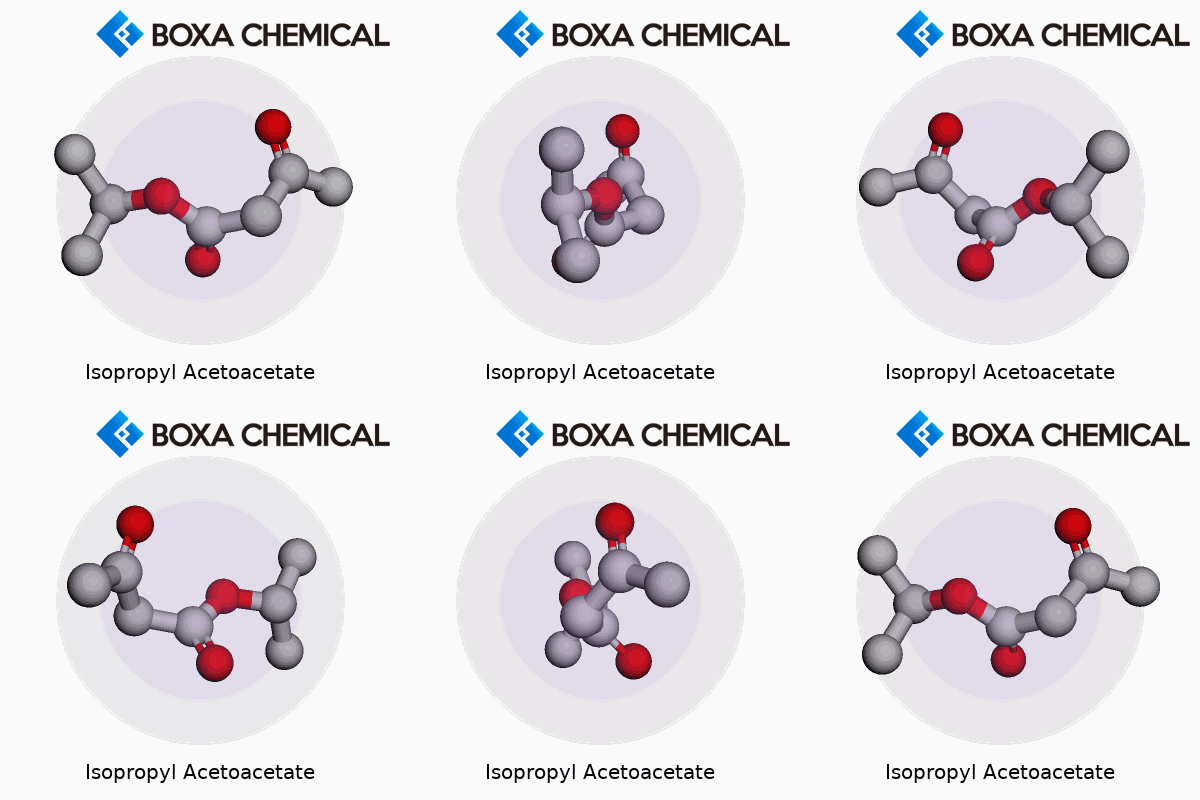
People often ask why anyone should memorize a formula like C7H12O3. On the surface, it sounds like homework trivia until you see what this molecule can do. Isopropyl Acetoacetate bridges work between simple and complex molecules. Chemists rely on its unique structure—two carbonyl groups, with an isopropyl tail and an acetoacetate core—for making medicines, dyes, and flavors.
I’ve heard from process engineers and pharmaceutical researchers about the frustrations of searching for chemical inputs that not only react the right way but also keep costs and waste in check. Isopropyl Acetoacetate isn’t exotic; its formula packs versatility and predictability. In the lab, you see the practical difference a reliable intermediate makes: fewer failed reactions, better yield numbers, less waste heading to disposal.
Lab workers aren’t the only folks affected by this molecule. Academic teams and R&D groups face everyday challenges: running sustainable reactions, cutting down energy costs, and sourcing chemicals that check all the boxes for safety and biodegradability. Isopropyl Acetoacetate’s manageable toxicity and clear reactivity offer an approachable starting point for these projects.
I remember handling the compound for a project aimed at new pigment development. The ease with which the material slotted into multi-step syntheses saved days on the calendar—and maybe a few headaches. Factoring in costs, yields, and environmental impact, chemists in every corner weigh these trade-offs. For them, knowing the formula is more than a rote exercise; it becomes a stepping stone for greener or more profitable production runs.
Challenges hang around, especially as industries try to clean up chemical processes and follow stricter regulations. Isopropyl Acetoacetate opens doors to less polluting syntheses, cutting out heavier, more hazardous inputs. Researchers share tips on swapping solvents and reengineering steps with safety and efficiency in mind. C7H12O3 gives a thread between tradition and innovation.
Good chemistry keeps adapting. With input from students, teachers, and industry pros, attention shifts to better sourcing, recycling, and lifecycle analysis. I’ve seen how small changes, like picking the right intermediate, can ripple out through the supply chain. That's why every detail, including understanding a formula, fits into a bigger story of progress.
People working with chemicals like Isopropyl Acetoacetate quickly learn that cutting corners leads to real risks. This compound, often found in labs and manufacturing, carries hazards that many overlook until something goes wrong. I remember my own lab days – one careless placement near a heat vent, and we ended up needing a full evacuation. Best practices exist for a reason, and experience has taught me you never want to take shortcuts.
Isopropyl Acetoacetate is flammable and reacts poorly with moisture and strong oxidizers. That’s not just a technical detail. If stored near a window where sunlight heats it up or beside cleaning chemicals that contain bleach, disaster waits just around the corner. Many accidents trace back to improper storage, not the chemical itself. Historical accident reports back this up, with fires or toxic fumes often starting in crowded, poorly-organized storage rooms.
Safe storage starts with a cool, dry, well-ventilated area, away from direct sunlight and any ignition sources. Heat encourages decomposition or even combustion, especially in closed spaces. Even a sunny shelf can push temperatures higher than you’d expect. I’ve seen colleagues overlook an overhead light, only to discover containers hot to the touch hours later.
Ventilation plays a big role. Good airflow disperses vapors, reducing the risk of buildup. Investing in proper chemical cabinets with vents can make all the difference, especially in older labs or workshops where windows often stay shut. Storing containers tightly sealed helps, too — those vapors don’t just smell bad, they threaten health and safety when allowed to accumulate.
Plastic or glass containers work, but check for materials compatibility. Metal lids sometimes corrode over time, especially if humidity sneaks in. Leaky seals or old rubber gaskets can turn a safe container into a hazard. Always label containers with the compound’s full name and any handling warnings. I’ve seen containers with hand-scribbled notes fade or wash away, leaving coworkers guessing — a gamble no one should make.
Chemicals should never share space with food, personal items, or unrelated materials. Cross-contamination isn’t just a distant regulatory concern. Accidental grabs or misplaced containers happen in the busiest of workspaces, so physical separation lowers risk. Locking storage cabinets and clear signage send a signal: only trained people can access these chemicals.
Training shapes habits. It’s easy for new staff or even seasoned professionals to lapse into thinking, “one shortcut won’t hurt.” But ask anyone who’s experienced a chemical mishap, and the lesson sticks. Regular safety meetings, updates from reliable sources like OSHA or university safety offices, and mandatory refresher trainings create a culture of vigilance.
Safety isn’t just about ticking boxes for compliance. Careful storage gives peace of mind. Communities trust those who handle chemicals to protect the environment and public health. It’s on everyone who opens a bottle or stacks a container on the shelf to honor that trust. From my own years surrounded by beakers and bottles, I came to respect every guideline — not because someone said to, but because one close call was enough.
People who work in chemistry labs, paint shops, or pharmaceutical manufacturing know how chemicals like isopropyl acetoacetate quietly shape the products we rely on every day. This compound doesn’t make headlines, but it helps manufacturers solve real problems — from formulating big batches of pigments to building medicines that work reliably every time you need them.
I’ve seen isopropyl acetoacetate at work on the production floor. Its ability to react in controlled ways makes it perfect for creating pigments and colorants. The dyes that make up the color palette in textile factories and ink plants need consistency, and this chemical helps get the shades right, batch after batch. Behind that spot-on blue in your jeans or the bright red of a billboard, there’s often some pretty smart chemistry driven by isopropyl acetoacetate.
The science is simple enough: isopropyl acetoacetate reacts with aromatic compounds to build strong bonds, creating the backbone of many modern dyes and printing inks. This isn’t just a trivia fact from a chemistry textbook. Designers, printers, and painters demand quality, and even a minor slip during color creation means wasted product, lost contracts, or unhappy customers.
Anyone who steps into a pharmaceutical research lab soon realizes that small molecules make a big difference in human health. Isopropyl acetoacetate helps chemists construct key components of medicines. Some treatments for heart conditions, infections, or neurological disorders involve molecules born in part from the reactions made possible by this chemical.
Its reputation comes from reliability. Pharmaceutical teams count on it to react smoothly, which cuts down on batch failures. Less waste means more medicine reaches patients who need it. Medical companies also face strict rules to make drugs without dangerous leftovers. Because isopropyl acetoacetate reacts cleanly, it helps companies meet regulatory demands.
Organic synthesis stays at the core of many modern industries. Isopropyl acetoacetate acts like a builder’s toolkit. Its chemical structure means it fits into different reaction paths, letting chemists adapt to changing demands or shortages of raw materials. Factories don’t like running out of supplies, and the flexibility of this molecule often saves the day.
For coatings, adhesives, and even fragrance producers, it creates the structural backbone for complex molecules. I’ve seen formulators tweak recipes for a new type of resin or a better-smelling perfume, all starting from this basic raw material. Its value lies in reliability and results, not just potential.
Using chemicals responsibly matters more than ever. Data from regulatory agencies make clear that safety guidelines lower the risk of harm — both for workers and the wider world. Companies investing in careful storage, training, and waste management not only meet legal requirements but also build trust with buyers and the community.
Researchers explore safer alternatives and greener processes every year. Even as isopropyl acetoacetate continues to power fast-paced industries, sustainability sits atop the minds of those who use it. Teams that innovate, reduce emissions, and improve handling get rewarded with lower costs and fewer accidents.
Day in, day out, isopropyl acetoacetate shows the quiet importance of chemistry that works, supports innovation, and — when used wisely — contributes to both industry and society.